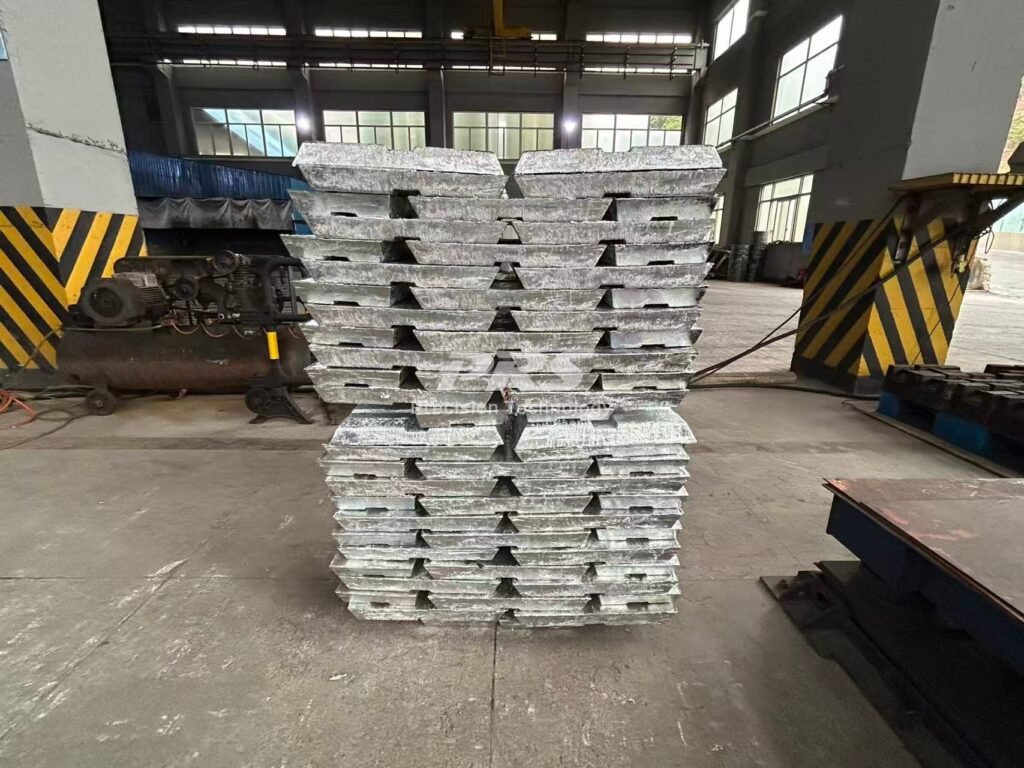
Zinc recovery from steel ash runs through a chloride-based (ammonia) electrowinning process, and a Chloride Based Zinc Aluminum Cathode Plate from Steel Ash needs to survive an electrolyte that’s more aggressive than the sulphate electrolyte most zinc plants use. A cathode plate built for a sulphate process doesn’t always perform as well here.
PRS’s Chloride Based Zinc Aluminum Cathode Plate from Steel Ash addresses this with a different hanger bar (also called conductive beam) construction, a different copper-aluminum joint, and a different approach to protecting the plate at the liquid level area. This article walks through each of these differences and what they change for plants running this process.
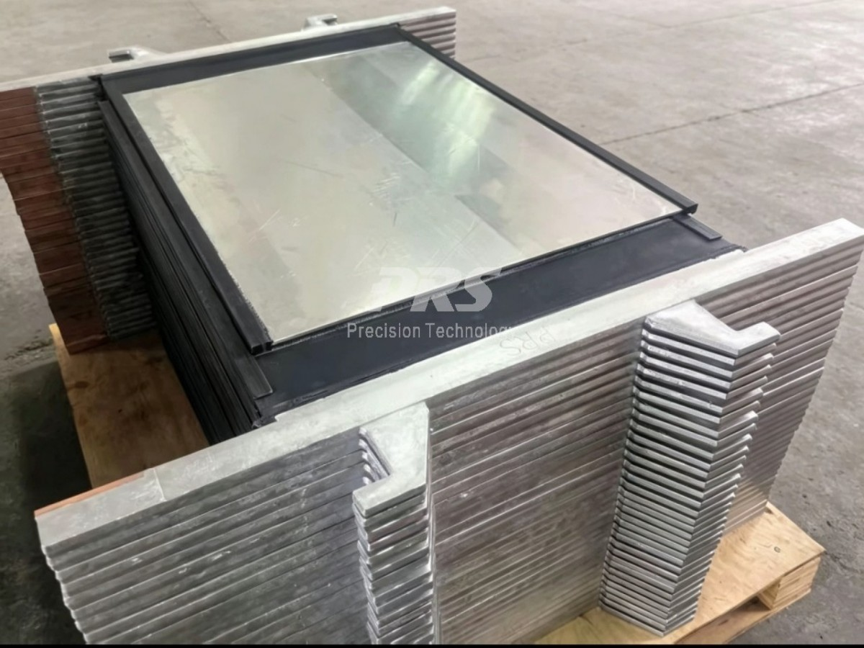
1. What Makes This Chloride Based Zinc Aluminum Cathode Plate Different: Die-Cast Hanger Bar, Lifting Lugs, and Conductive Head
Many cathode plates weld the conductive head onto the hanger bar as a separate step. In some designs, the bar itself is also assembled from more than one piece.
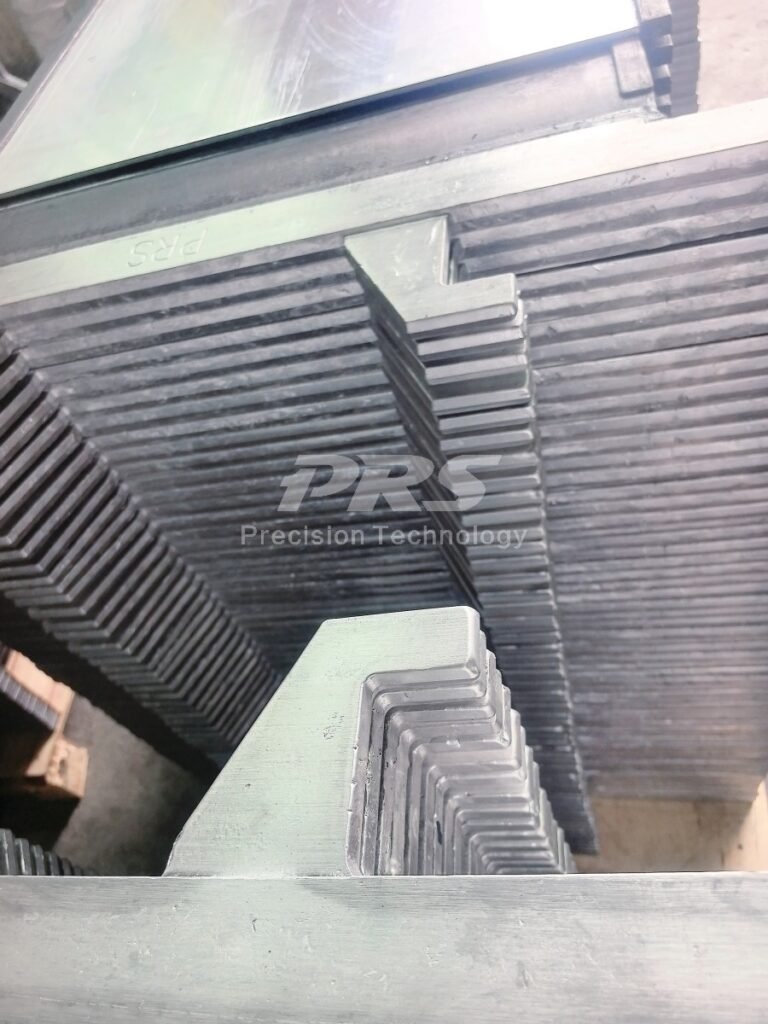
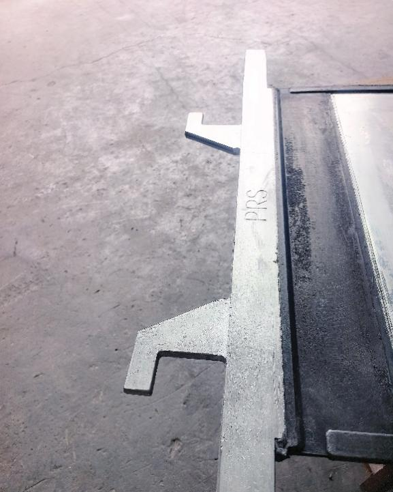
PRS die-casts the hanger bar, lifting lugs, and conductive head as a single piece, under 20,000 tons of pressure. This removes welding at this stage entirely.
The hanger bar and the cathode blade both use 1070 pure aluminum (Al ≥ 99.7%). Because the structure uses one consistent material rather than joined parts of different origin, current can travel through it more evenly, which can help conductivity.
Key Sale Points:
- No welding at the hanger bar, lifting lug and conductive head stage
- One consistent material (1070 aluminum) across the hanger bar and cathode blade
- In testing, each plate produces r about 0.5 kg more zinc per day, per 1 m² deposition area (single side)
- This configuration also lowers power consumption per unit of output
2. Trapezoidal Bayonet-and-Clamp Joint Between Copper and Aluminum
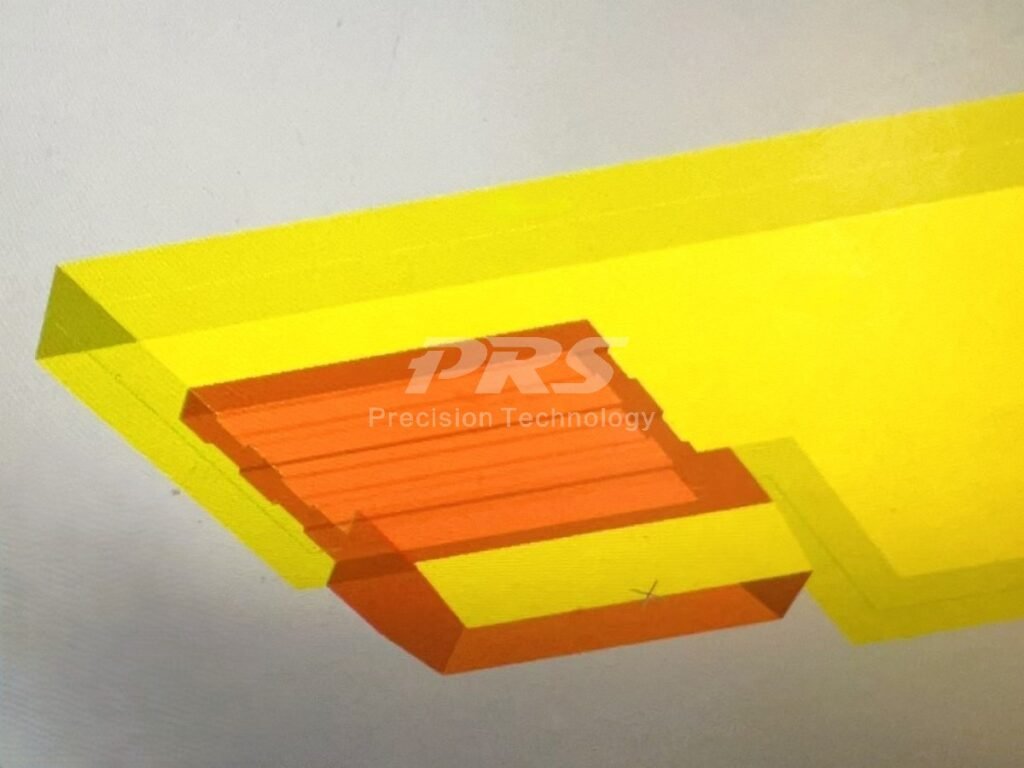
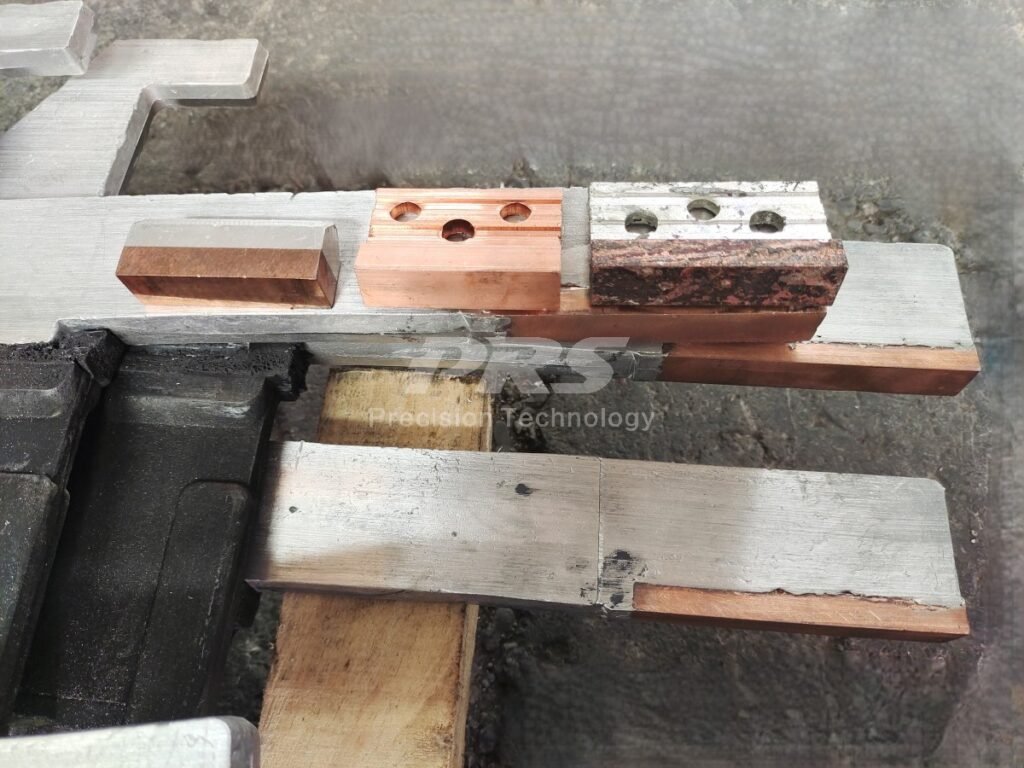
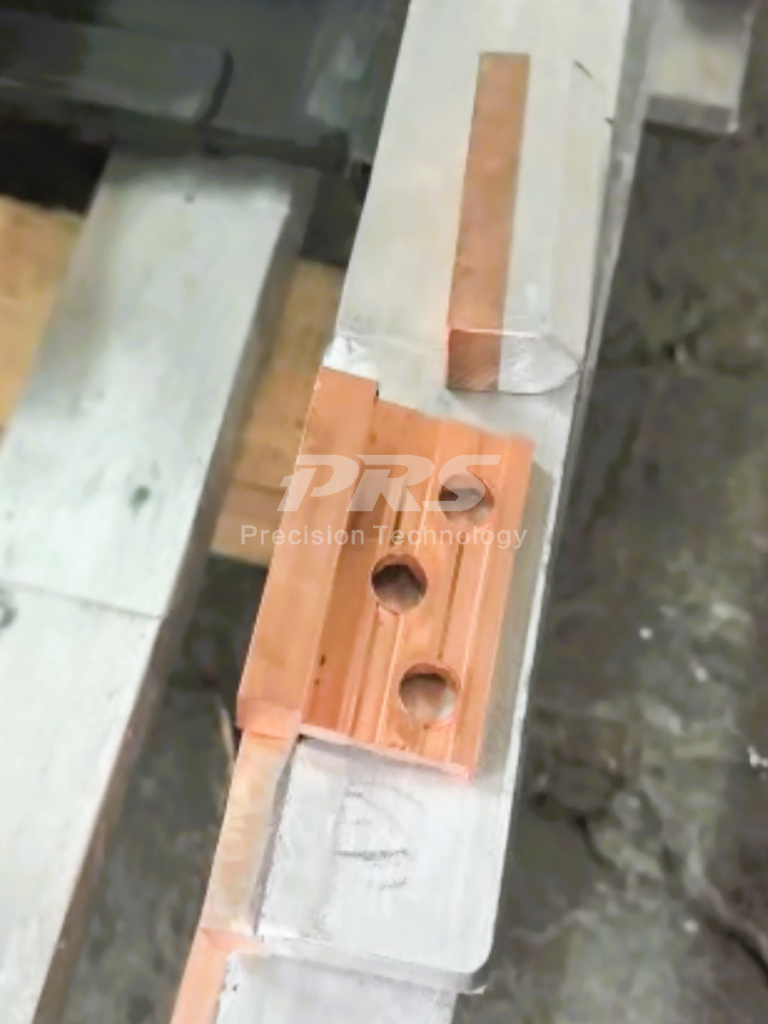
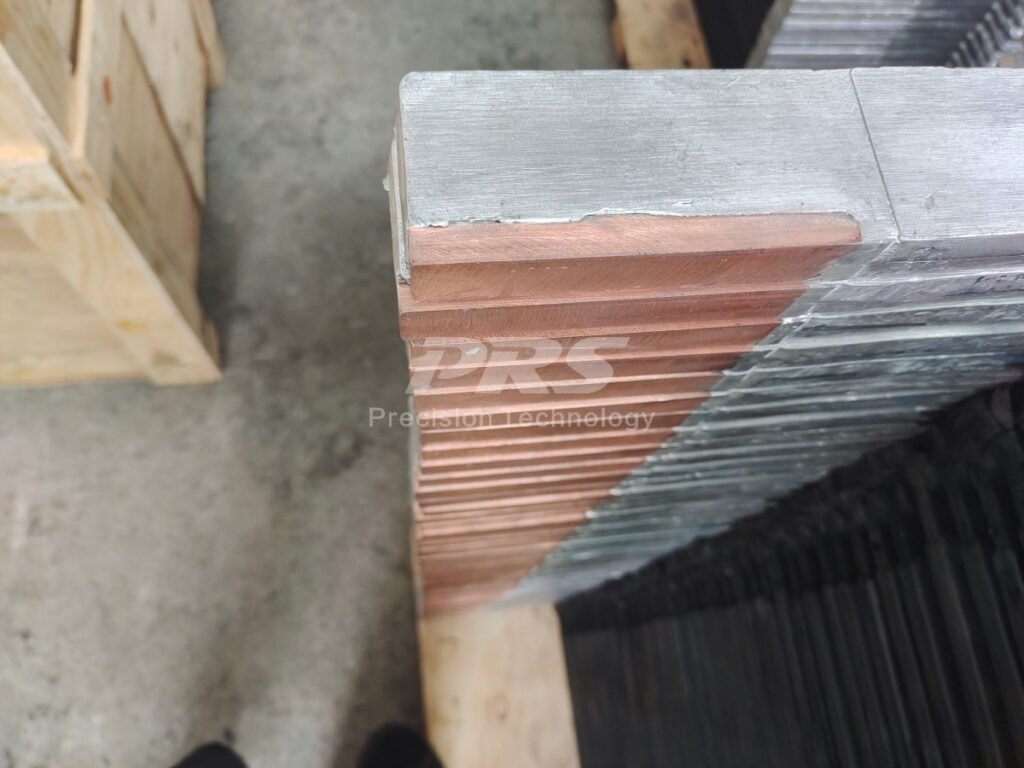
Where the aluminum hanger bar meets the copper conductive end, PRS uses a trapezoidal bayonet-and-clamp joint rather than a flat weld — machining a trapezoidal bayonet into the aluminum and a matching clamp into the copper, then die-casting the two together.
Before casting, the copper also goes through an added tin-plating step. As a result, the aluminum, tin, and copper interlock with minimal gap between them.
This close fit reduces the chance of electrolyte working its way into the joint, and it generally conducts better than a conventional explosion-welded joint. The surface at this joint can look slightly irregular after casting — that’s a normal result of the process rather than a defect.
Key Sale Points:
- Trapezoidal bayonet-and-clamp design minimizes gap at the Cu-Al joint after die-casting
- Reduces electrolyte-driven corrosion risk at the joint
- Generally better conductivity than explosion-welded joints
3. Vulcanized Rubber Edge Strip at the Liquid Level Area
The liquid level area of the plate, along with the edge strips above it, is typically among the areas most exposed to corrosion on a cathode plate.
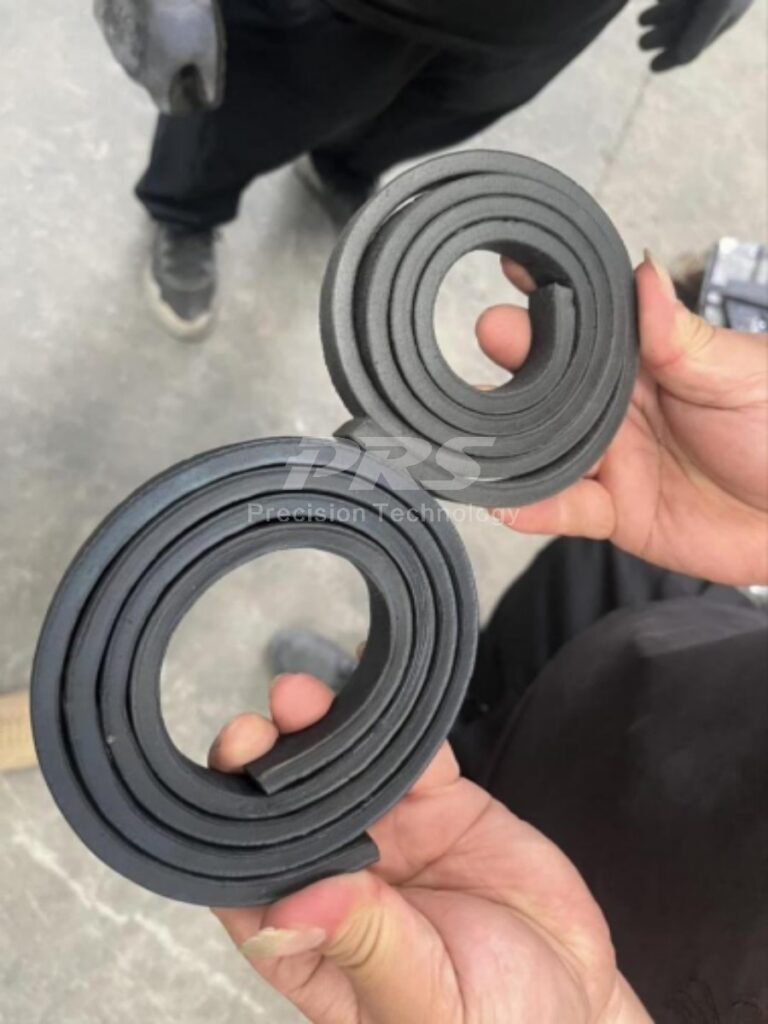
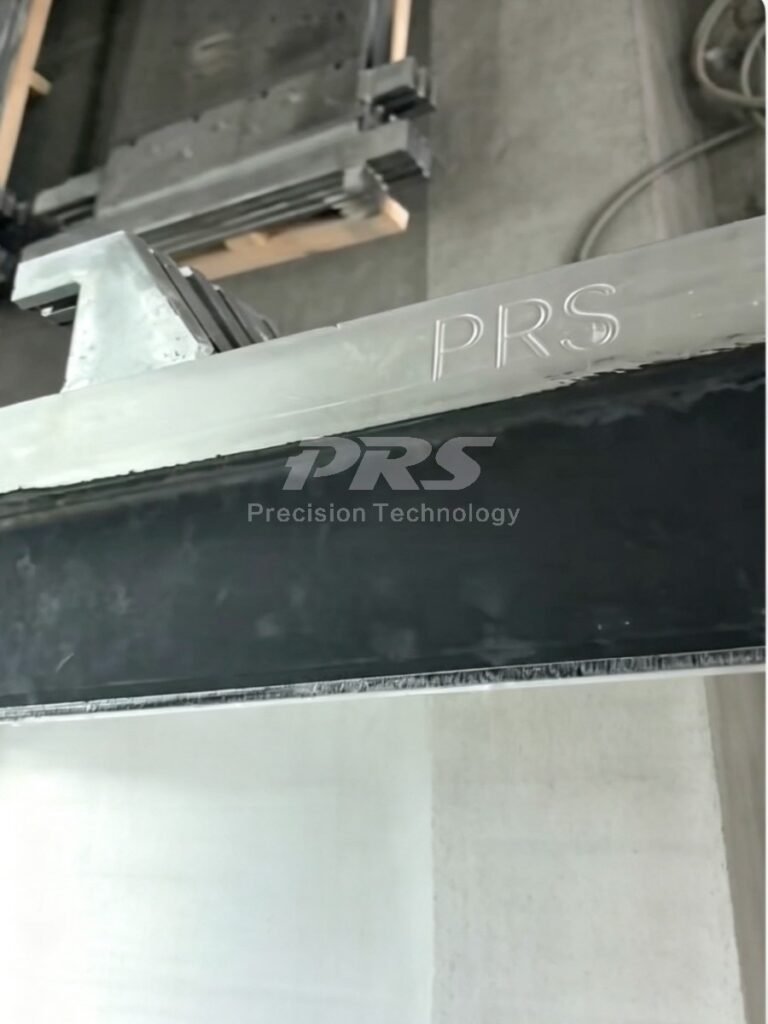
PRS’s process starts by roughening the surface along the left and right edge strips and the area above the liquid level line. Next, a dedicated adhesive goes on. Finally, a vulcanized rubber strip is pressed onto the plate in one step, under a vulcanizing press at 170°C.
PRS chooses vulcanized rubber for its resistance to acid and heat. Because the bonding happens in one heat-pressed pass over a roughened, adhesive-coated surface, this process lowers the risk of the strip lifting or peeling at the edges — a common starting point for corrosion at the liquid interface.
Below the hanger bar, on the aluminum surface exposed to the electrolyte, PRS applies a separate anti-corrosion coating. PRS also builds a beveled edge into the joint between the coating and the cathode blade, which makes zinc stripping easier.
Key Sale Points:
- Vulcanized rubber strip chosen for acid and heat resistance
- One-pass heat-pressed bonding reduces edge-strip lifting and liquid-interface corrosion
- Beveled coating edge simplifies zinc stripping
4. Lifting Lug Strength and Hanger Bar-to-Blade Weld
The lifting lugs carry the plate’s own weight plus over 100 kg of deposited zinc sheet without cracking, under normal operating conditions.
PRS casts the copper-aluminum composite conductive head rather than explosion-welding it, which lowers the risk of the copper head coming loose over time.
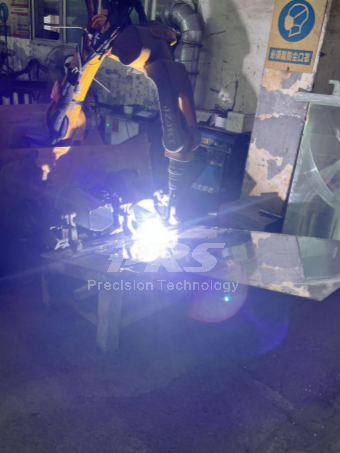
Where the hanger bar meets the cathode blade, PRS reinforces the joint with robotic double-sided welding, producing a smooth, fully penetrated weld with minimal burrs, porosity, or inclusions.
Chloride Based Zinc Aluminum Cathode Plate vs. a Traditional Extruded-Beam Plate
A traditional cathode plate built around an extruded aluminum hanger bar takes a different approach at nearly every point covered above. The table below compares it against PRS’s Chloride Based Zinc Aluminum Cathode Plate from Steel Ash.
Item | Traditional Extruded-Beam Plate | PRS Chloride-Based Plate (Steel Ash / Ammonia Process) |
Hanger bar and head | Bar extruded; conductive head welded on separately | Hanger bar, lifting lugs, and conductive head die-cast as one piece |
Material continuity | Bar and cathode blade may differ in origin/joining | Hanger bar and cathode blade both 1070 pure aluminum |
Copper-aluminum joint | Typically explosion-welded | Trapezoidal bayonet-and-clamp joint, tin-plated, die-cast together |
Liquid level protection | Standard coating | Vulcanized rubber edge strip, heat-pressed at 170°C |
Hanger bar-to-blade joint | Varies by manufacturer | Robotic double-sided welding |
None of this makes a traditional plate unsuitable for a sulphate-based process, where it’s been used for years. But in a chloride-based, ammonia environment, these design choices target specific failure points — joint corrosion, edge-strip lifting, conductivity loss at welded joints — that tend to surface faster here than in a standard sulphate process.
What This Means for Steel Ash Zinc Recovery Operations
For plants recovering zinc from steel ash through a chloride-based process, cathode plate replacement frequency is often a real operating cost. It’s not just the plate itself — it’s the downtime and labor involved in swapping plates out more often than a sulphate-process plant would expect to.
These design choices aim to extend service life in this specific environment and reduce how often plants need to replace plates. The die-cast hanger bar design also supports higher zinc output per plate.
If you’re running a chloride-based zinc electrowinning process from steel ash, PRS’s Chloride Based Zinc Aluminum Cathode Plate from Steel Ash is built specifically for that environment. Get in touch with our team or take a look at the full product specifications.