
Selecting the optimal anode is one of the most critical decisions in copper electrowinning, directly impacting your operational costs, productivity, and final product quality. With several options available, the “best” choice is not universal—it depends entirely on your specific operational goals and constraints.
This guide provides a clear comparison between three primary anode technologies: the traditional Lead Alloy Anode, the innovative Fence-Type Lead Alloy Anode, and the advanced Titanium-based Lead Dioxide Anode. We will analyze their key characteristics to help you identify the most suitable solution for your plant.
Comparison at a Glance: Key Technical & Economic Factors
The table below summarizes the core differences between the three anode types across critical performance indicators.
| Feature | Lead Alloy Anode Plate | Fence-Type Lead Alloy Anode Plate | Titanium-based Lead Dioxide Anode Plate |
|---|---|---|---|
| Initial Procurement Cost | Medium | Low (due to material savings) | High |
| Typical Service Life | 5 years | 5+ years (improved structure reduces warping) | 6~9 years (inert titanium substrate) |
| Energy Consumption | Higher cell voltage over time | ~10-20% lower than traditional lead alloy (efficient gas release) | ~5-15% lower than traditional lead (stable, low-voltage surface) |
| Anode Slime Generation | Significant, leading to cathode contamination | Significant, but open structure may improve slime management | Negligible to zero (non-consumable active layer) |
| Maintenance & Downtime | Higher (requires cleaning, prone to warping) | Medium (stable structure reduces short-circuit risk) | Very Low (dimensional stability, no warping and higher current density available) |
| Cathode Purity | High (due to our patented increased surface area treatment on the anode) | High (same as the traditional lead alloy anode plate) | Highest (virtually eliminates lead contamination) |
| Key Performance Limitation | The technology is mature and stable, but it has high energy consumption and easily generates anode slime. | It can withstand higher current densities without deformation, and the cell voltage is relatively low, meaning lower energy consumption and higher production efficiency, but it is also prone to generating anode slime. | Longest service life, lower energy consumption, and virtually no anode slime generation, but the initial procurement cost is higher. |
Analysis: Which Anode is Right for Your Operation?
The ideal choice balances your budget, production targets, and quality requirements. Here’s a breakdown of which anode suits different types of plant owners.
1. Lead Alloy Anode Plate: The Proven Workhorse
- Best For: Plant owners with limited upfront capital, smaller-scale operations, strict risk control, or those operating in a low-energy-cost environment where the priority is minimizing initial investment.
- Why Choose It: This is a mature, well-understood technology with a low purchase price. It is a low-risk option for standard operations where maximizing cathode purity to the highest LME grade is not the primary goal, and where lead contamination can be managed through electrolyte purification.
- Considerations: Be prepared for higher long-term energy bills, regular anode replacement costs, and expenses related to managing anode slime and cathode scraping.
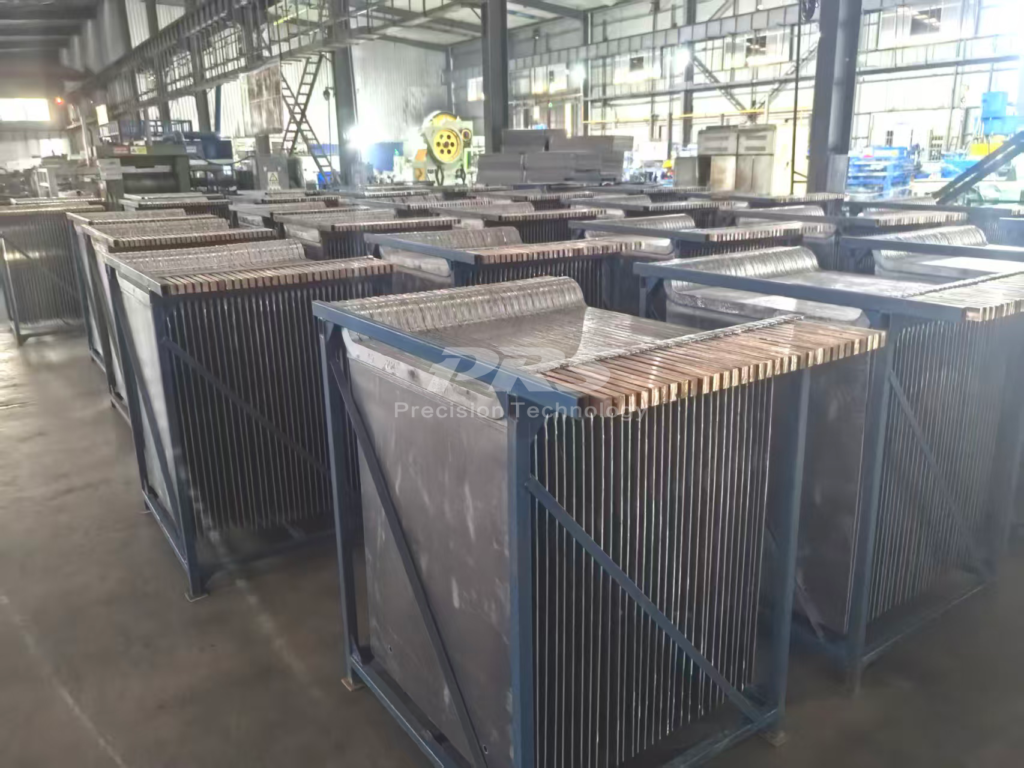
2. Fence-Type Lead Alloy Anode: The Balanced Performer
- Best For: Plant owners seeking a middle-ground solution—better efficiency than traditional anodes, and the initial purchase cost is also 4-8% lower. Ideal for operations focusing on improving current efficiency and reducing energy costs. The larger the production scale, the greater the increasing capacity and the energy cost savings.
- Why Choose It: Its unique design offers tangible benefits, including significant energy savings from lower cell voltage and improved bath circulation due to efficient gas release. The lighter weight also simplifies handling. It represents a solid step forward in performance without a lower material cost.
- Considerations: It does not solve the fundamental issue of lead contamination, as slime is still generated.
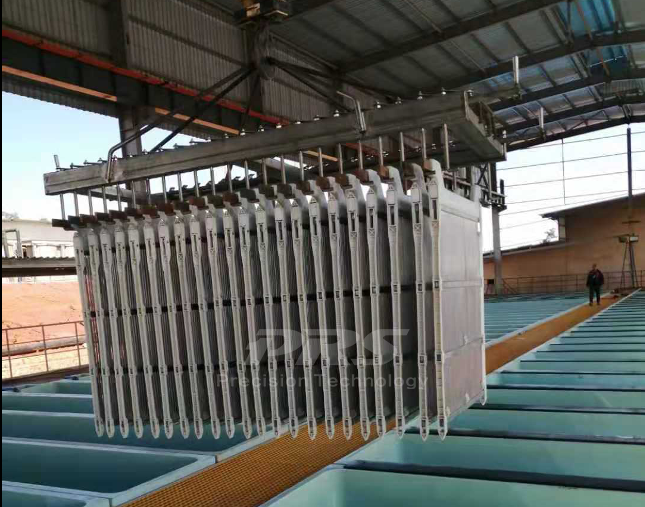
3. Titanium-based Lead Dioxide Anode: The Premium Investment
- Best For: Large-scale, high-volume producers focused on maximizing cathode purity (e.g., LME Grade A), longest service life, minimizing operational downtime, and achieving the lowest total cost of ownership (TCO) over the long term.
- Why Choose It: This anode is the superior technical solution. Its near-zero sludge generation guarantees the highest cathode purity, eliminating losses from scraped cathodes. The extremely long service life and minimal maintenance reduce downtime significantly. While the initial cost is high, the savings from reduced energy consumption, eliminated lead pollution, and higher productivity often result in a compelling ROI for high-capacity plants.
- Considerations: The higher initial investment requires more capital.
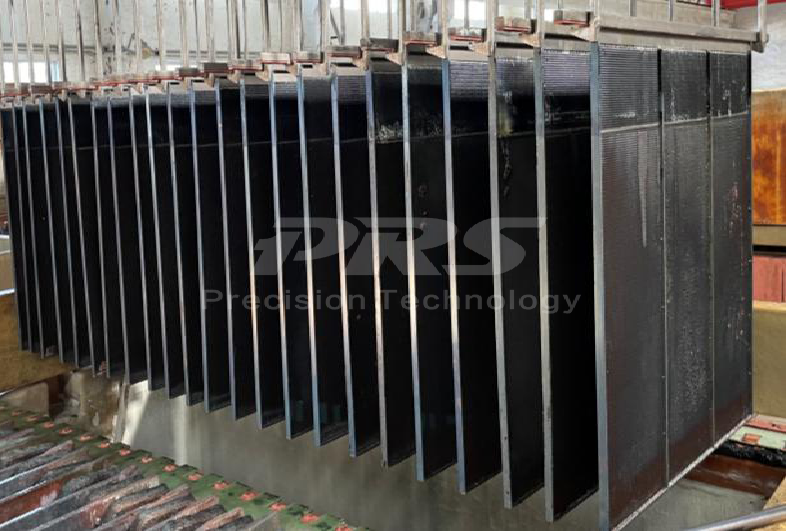
Tell Us Your Needs, We’ll Provide the Solution
There is no one-size-fits-all answer. The optimal anode for your plant depends on a combination of factors, including:
- Current Energy Costs
- Target Cathode Purity
- Planned Production Capacity and Current Density
- Electrolyte Chemistry (e.g., chloride, manganese, or iron content)
- Available Capital Budget
- Maintenance and Downtime Tolerance
We are here to help you navigate this decision. By sharing your specific plant conditions and operational goals, our technical team can recommend the most appropriate anode type and provide a customized design.
Contact us today for a free, no-obligation consultation. Share your requirements, and we will recommend the ideal anode solution for your facility, complete with a free technical drawing and a quick quotation.
Let us help you optimize your tank house for maximum efficiency and profitability.
